If you live in Carbondale, Pennsylvania, chances are you’ve heard scratching in the attic at least once. Squirrels are incredibly common throughout Northeastern Pennsylvania, especially in neighborhoods surrounded by mature trees and older homes.
From the quiet streets around Memorial Park to the hillside neighborhoods climbing toward Salem Mountain, squirrels move easily from branch to rooftop. Once they find a small weak spot in a roofline, they can turn it into an entry point surprisingly fast.
And when that happens, the issue goes from wildlife curiosity to a roofing problem.
A squirrel chewing through your roof isn’t just a nuisance. It can lead to insulation damage, water intrusion, and structural deterioration if the opening isn’t addressed quickly.
Why Squirrels Target Roofs in the First Place
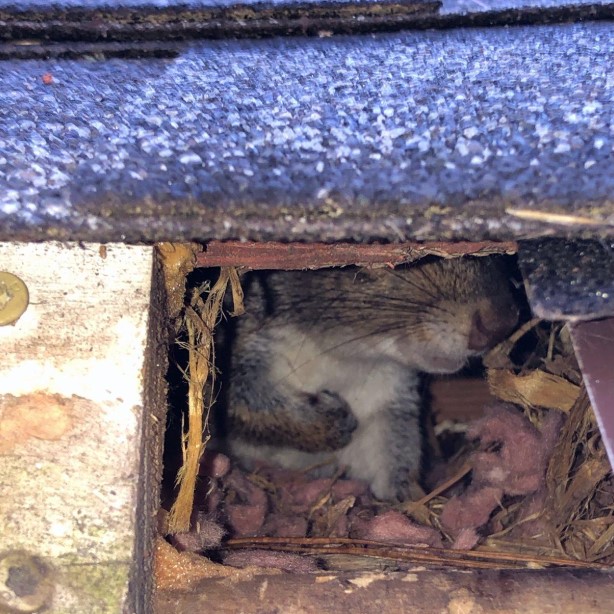
Squirrels aren’t trying to damage a house on purpose. They’re simply looking for warm, protected nesting space, and an attic provides exactly that.
In Carbondale, especially during fall and winter, squirrels often search for places where they can stay dry and protected from cold weather.
Roofs become attractive when:
- Nearby trees provide easy access
- Roof edges have aging wood or soft spots
- Soffits or vents are slightly loose
- Older homes have small structural gaps
Many homes in Carbondale were built decades ago, and while they’re solid structures, small vulnerabilities around the roof edge can develop over time.
For a squirrel, a half-inch weakness in wood fascia can be the start of a much larger hole.
Signs a Squirrel May Have Entered the Roof
The most obvious sign is noise. Homeowners often hear scratching, scurrying, or occasional thumping in the attic.
But there are other clues worth watching for:
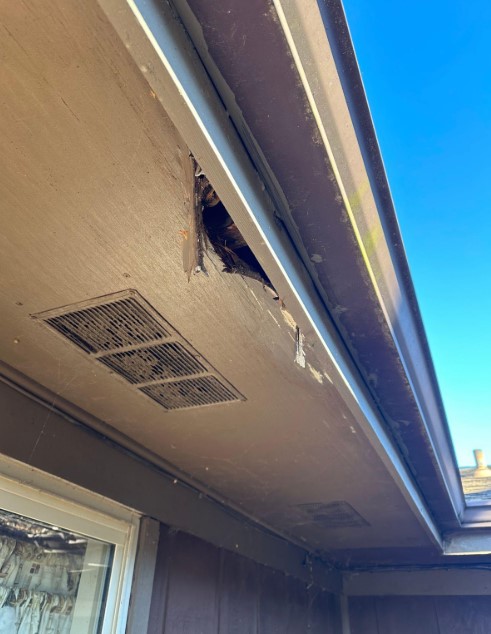
- Small holes or chew marks along the roofline
- Damaged soffits or fascia boards
- Insulation scattered around attic spaces
- Droppings near attic entry points
- Daytime activity sounds (squirrels are typically active during daylight)
Unlike raccoons, which tend to make larger, more aggressive openings, squirrels usually expand small weaknesses gradually.
This can make the damage harder to notice until they’ve already made themselves comfortable inside.
The First Step: Confirm the Animal Is Gone
Before repairing the roof, it’s critical to make sure the squirrel has actually left.
Sealing a hole while an animal is still inside can create bigger problems. The squirrel may panic and chew through new areas of the roof or even find its way into interior walls.
In many cases, homeowners work with a local wildlife removal specialist to ensure the attic is clear before repairs begin.
Once the animal is removed and the entry point is identified, the roof repair process can move forward.
Where Roof Damage Usually Happens
Squirrels rarely chew through the middle of a roof. Instead, they target vulnerable edges and transitions.
The most common entry points include:
- Roof soffits
- Fascia boards
- Roof vents
- Dormer corners
- Gable vents
Older homes around Carbondale often have wooden trim pieces along these areas. After decades of weather exposure, those materials can soften slightly, making them easier for animals to chew.
A Small Opening Can Lead to Bigger Problems
Once a squirrel has created an entry point, the damage often spreads beyond the hole itself.
Inside the attic, squirrels can:
- Tear apart insulation for nesting
- Chew electrical wiring
- Leave droppings and debris
- Create pathways through attic materials
But the roofing issue doesn’t stop there.
Any opening in the roofline also allows rainwater and snowmelt to enter, especially during Northeastern Pennsylvania’s freeze-thaw cycles.
Over time, that moisture can lead to:
- Water stains on ceilings
- Drywall damage
- Mold growth in attic spaces
In winter, even a small hole can allow cold air to enter the attic and contribute to ice dam formation along the roof edge.
Why Animal Damage Often Requires Roofing Repairs
Some homeowners assume this kind of problem is only a pest issue. But once animals chew through roofing materials, the structure itself usually needs attention.
A typical repair may involve:
- Replacing damaged fascia or soffit boards
- Reinforcing the entry point with new wood materials
- Installing protective vent covers
- Repairing nearby shingles
- Sealing the roofline to prevent future entry
When done properly, the repair restores both the structural integrity and weather protection of the roof.
A Quick Technical Detail Most Homeowners Don’t Realize
Many modern roofing systems rely on a layered structure to keep water out.
From the top down, that system typically includes:
- Roofing shingles
- Underlayment
- Roof decking (usually plywood or plank boards)
When a squirrel chews through the roof edge, it often damages more than just the visible surface material.
If the underlying decking is compromised, water can seep beneath the roofing system. That’s why repairs sometimes involve replacing small sections of decking before installing new exterior materials.
This step ensures the repair lasts long-term instead of becoming a recurring leak point.
A Common Question From Carbondale Homeowners
Can a squirrel really cause serious roof damage?
Yes, it’s more common than many people think.
While the initial hole might be small, animals tend to reuse the same entry point repeatedly. Over time, the opening grows larger, allowing moisture, debris, and additional wildlife to enter the attic.
What starts as a minor chew mark can eventually turn into roof leaks, insulation damage, and interior ceiling repairs if it isn’t addressed.
The good news is that when caught early, the repair is usually straightforward.
Preventing Future Roof Entry
Once the roof has been repaired, a few preventative steps can reduce the chances of animals returning.
Common prevention strategies include:
- Installing reinforced metal vent covers
- Trimming tree branches away from the roofline
- Repairing aging soffit or fascia boards
- Sealing small gaps along roof edges
These upgrades don’t just keep squirrels out. They also strengthen the roof against weather and long-term wear.
Why Squirrel Damage Is Common in Carbondale
Carbondale has a unique combination of factors that make wildlife encounters more likely.
The area includes:
- Mature tree-lined neighborhoods
- Older homes with historic roof structures
- Hillside terrain with nearby wooded areas
A squirrel can easily travel from a tree branch to a roofline, especially in neighborhoods near Salem Avenue, Belmont Street, or the wooded areas around the Carbondale YMCA.
For homeowners, that means roof edges and vents often become the first place animals investigate.
Addressing the Problem Early
A squirrel chewing through your roof might seem like a small issue at first, but it’s one of those problems that grows quickly if ignored.
The sooner the entry point is repaired and reinforced, the easier it is to prevent bigger structural and moisture issues later.
In a town like Carbondale, where homes have stood through decades of Pennsylvania winters, maintaining the integrity of the roofline is one of the best ways to keep the entire house protected.