Real Estate

In the Poconos and northeastern Pennsylvania, winter doesn’t just bring snow — it brings weight, movement, and sometimes sudden release. Anyone who has lived through a few winters in Lackawanna or Luzerne County has likely seen it happen: a quiet morning followed by a loud whoosh as a sheet of snow suddenly slides off a roof and crashes to the ground.
This phenomenon is often called a roof snow slide or roof avalanche. It’s common on steep roofs, metal roofs, and newer roofing materials that shed snow efficiently. While it might look dramatic, it’s actually a predictable part of winter roofing in this region.
For homeowners and business owners in areas like Carbondale, Scranton, Pittston, and surrounding mountain communities, understanding how snow behaves on a roof is more than just interesting — it can help prevent damage, protect walkways, and improve winter safety.
Why Snow Slides Off Roofs in the Poconos
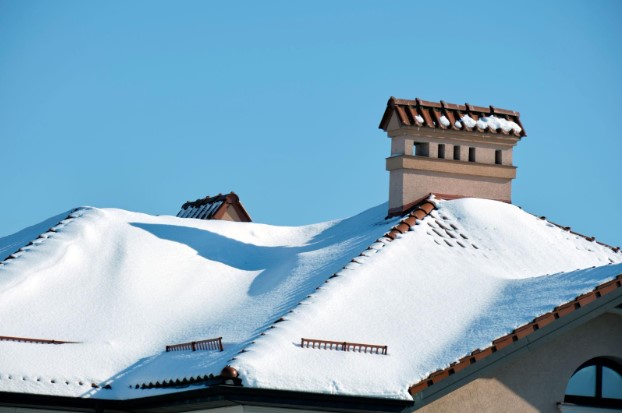
Snow rarely stays frozen in place all winter. The freeze-thaw cycle common in the Poconos creates layers within the snowpack.
A typical winter pattern looks like this:
- A snowfall accumulates on the roof.
- Sunlight or attic heat slightly warms the underside.
- The lower layer begins to melt.
- Overnight freezing creates a thin ice layer beneath the snow.
At that point, gravity does the rest. Once friction is reduced enough, the entire snow mass can release at once, sliding down the roof in a large sheet.
Steeper roofs accelerate the process.
|
Roof Pitch |
Snow Slide Risk |
|
Low slope (2/12 – 4/12) |
Snow tends to stay longer |
|
Moderate (5/12 – 7/12) |
Partial sliding common |
|
Steep (8/12+) |
Full roof avalanches likely |
Many homes across Carbondale and the northern Lackawanna hills were built with steeper roofs specifically to deal with heavy snowfall. While that design helps prevent structural overload, it also makes snow shedding more dramatic.
Metal Roofs vs Asphalt Roofs in Snow Conditions
Different roofing materials shed snow differently.
|
Roofing Material |
Snow Behavior |
|
Metal Roofing |
Snow slides easily and quickly |
|
Architectural Shingles |
Snow sticks longer |
|
Slate Roofing |
Moderate shedding |
|
Rubber/Flat Membranes |
Snow typically stays in place |
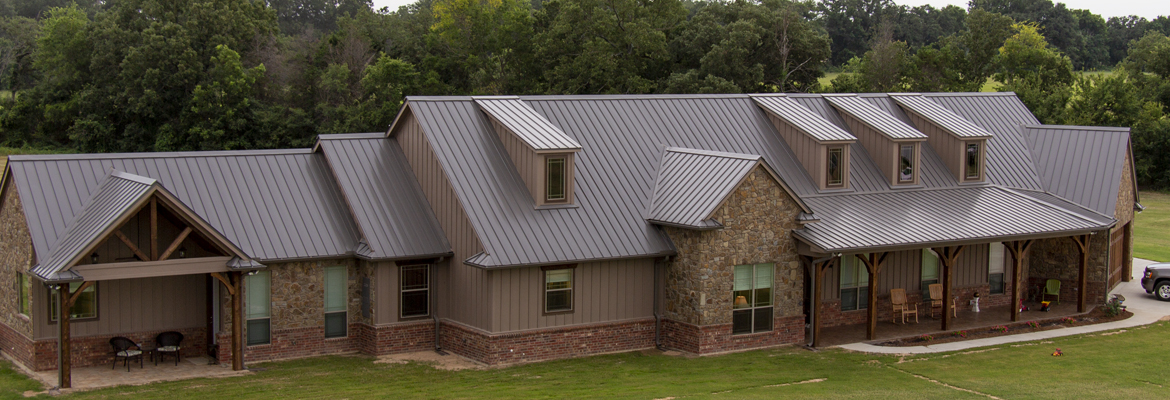
Metal roofs are particularly common in rural or mountain areas of northeastern Pennsylvania because they shed snow efficiently and reduce long-term weight loads. However, that efficiency is exactly what causes the sudden snow slides people notice.
A large metal roof can release hundreds of pounds of snow in seconds.
When Snow Slides Become a Problem
Most snow slides are harmless. But certain situations can create risks around homes or buildings.
Areas Below the Roofline
Snow dropping from a steep roof can bury:
- Walkways
- Decks
- Basement entrances
- Outdoor HVAC units
- Vehicles parked too close to the house
In commercial settings, it can also block storefront entrances or pedestrian areas.
Gutters and Roof Edges
If snow slides while partially frozen, it can catch the edge of gutters and tear them loose. This is especially common when:
- Ice dams form near the eaves
- Gutters are older or loosely mounted
- Heavy icicles add extra weight
Entryways and Doors
Many homes in the Poconos have front doors positioned beneath roof slopes. A sudden snow release over a doorway can create an unexpected hazard for anyone walking out.
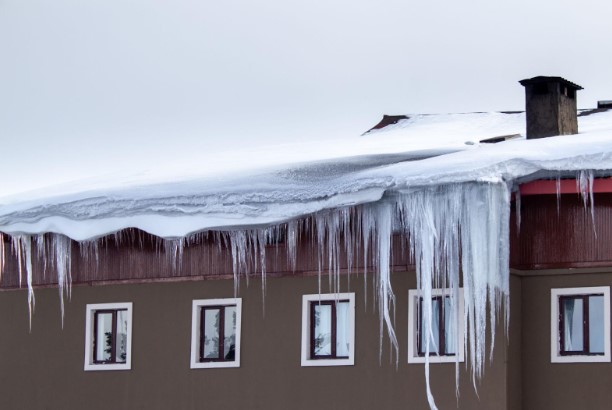
Ice Sheets: The Hidden Risk
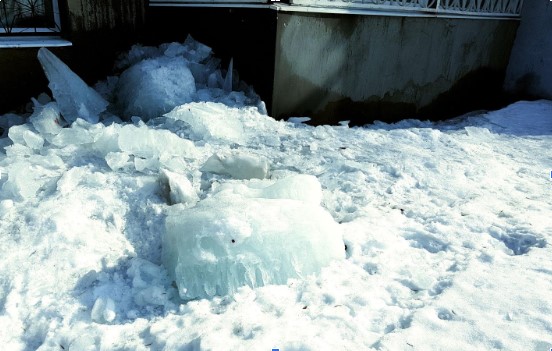
Snow slides get the attention, but ice sheets are often the bigger issue.
Ice forms when melting snow refreezes at the colder roof edge. Over time, this creates ice dams, which trap water behind them.
When a thaw finally occurs, that frozen mass can release all at once.
Unlike powdery snow, an ice sheet is dense and heavy. It can:
- Bend gutters
- Damage railings
- Crack deck boards
- Break landscaping features
Ice dams also cause one of the most expensive winter roofing problems: water intrusion under shingles.
Why Poconos Homes Are Especially Prone
Several local factors make snow slides and ice sheets particularly common in northeastern Pennsylvania.
Heavy Snowfall Totals
The higher elevations around the northern Poconos and Lackawanna County regularly see 40–60+ inches of snow per winter, sometimes much more during strong seasons.
Rapid Temperature Swings
Winter weather here rarely stays consistently cold. A typical pattern might be:
- 15°F overnight
- 35–40°F during the day
- Sun hitting dark shingles
This constant thaw-freeze cycle is ideal for ice formation beneath snow layers.
Steep Traditional Roof Designs
Many older homes throughout Carbondale, Archbald, and surrounding communities were designed with steep pitches to shed snow, which increases the likelihood of sliding events.
Managing Snow Shedding Without Fighting It
Trying to stop snow movement entirely usually isn’t practical. Instead, roofing professionals focus on controlling how and where it happens.
Several roof features can help regulate snow release.
Snow Guards
These small metal brackets attach to the roof surface and break up sliding snow into smaller pieces rather than allowing one massive sheet to fall.
They’re especially useful above:
- Doorways
- Garages
- Decks
- Walkways
Proper Attic Ventilation
Balanced attic ventilation keeps roof temperatures closer to the outside air. That reduces the melting that leads to ice layers and ice dams.
Ice & Water Shield Underlayment
Modern roofing systems in snow climates typically include a waterproof membrane under shingles along the eaves. This layer helps protect the home if ice dams force water backward under the roofing material.
Smart Gutter Placement
In heavy snow zones, gutters may be reinforced or positioned slightly differently to minimize the damage caused by sliding snow.
A Quick Reality Check for Poconos Homeowners
Winter Roofing Is Part of Life in Northeastern Pennsylvania
Snow sliding off your roof is not automatically a roofing failure.
In many cases, it actually means the roof is functioning correctly — shedding snow load before it becomes structurally dangerous.
However, recurring issues like these may signal a need to evaluate:
- Ice dam formation
- Attic insulation balance
- Roof edge design
- Gutter strength
- Snow guard placement
Because every home is built a little differently, the exact solution often depends on roof pitch, materials, and surrounding features.
Living in the Poconos means dealing with snow in ways homeowners in warmer states rarely think about. Roofs here have to handle heavy storms, freeze-thaw cycles, and months of winter stress.
When snow slides, ice forms, and winter pushes roofing systems to their limits, those conditions simply become part of the region’s building reality.
For property owners across Carbondale, Scranton, and the surrounding mountain communities, understanding how roofs behave in winter is one of the best ways to stay ahead of potential issues — and keep homes protected through every season the Poconos throws at them.